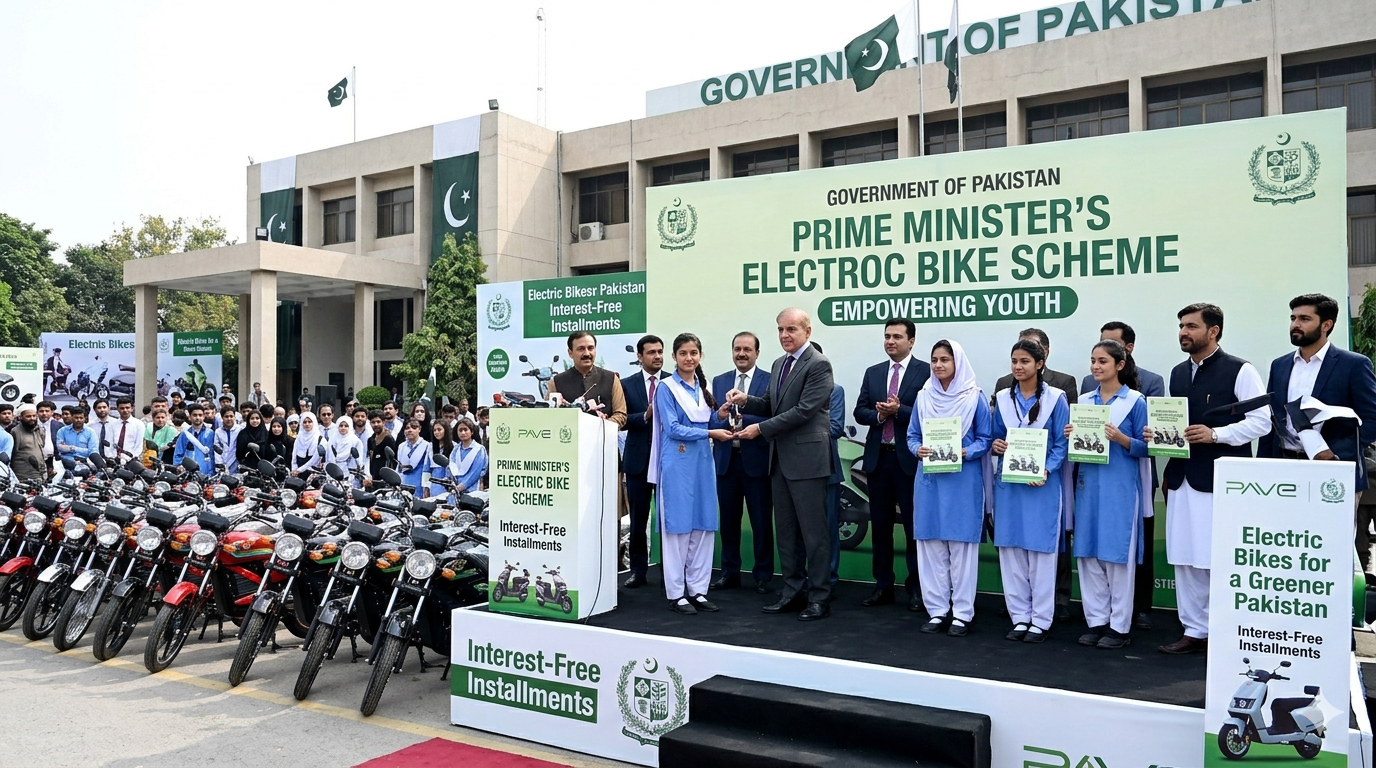
What is Accelerated Vehicle Electrification PAVE Program in Pakistan?
Imagine a Pakistan where rising fuel prices no longer strain your wallet, and city air feels cleaner with every breath. That’s exactly the vision behind the Accelerated Vehicle Electrification (PAVE) Program—a bold government initiative aimed at transforming how Pakistan moves.
With electric vehicles (EVs) gaining global momentum, Pakistan has stepped into the future with PAVE, making eco-friendly transport more accessible, affordable, and practical for everyday citizens.
What is the PAVE Program?
The Pakistan Accelerated Vehicle Electrification (PAVE) Program is a government-led initiative designed to promote the adoption of electric vehicles across the country. It operates under the broader New Energy Vehicle (NEV) Policy 2025–2030 and focuses on reducing dependence on fossil fuels while encouraging sustainable transport solutions.
At its core, PAVE combines financial incentives, infrastructure development, and policy support to accelerate EV adoption in Pakistan.
Key Objective
The main goal is simple:
Make electric vehicles affordable and widely available for the public.
Why Was the PAVE Program Introduced?
Pakistan faces two major challenges:
- Rising fuel import costs
- Increasing air pollution in urban areas
The PAVE program addresses both by encouraging a shift from petrol-powered vehicles to electric alternatives.
According to recent reports, electrifying even a fraction of vehicles could save Pakistan hundreds of millions of dollars annually in fuel imports.
Key Features of the PAVE Program
1. Subsidies on Electric Vehicles
One of the most attractive aspects of PAVE is financial support:
- Up to PKR 80,000 subsidy for electric bikes
- Up to PKR 400,000 subsidy for electric rickshaws/loaders
These subsidies significantly reduce the upfront cost of EVs.
2. Easy Installment Plans
The program offers:
- Interest-free or low-cost financing
- Monthly installment options for buyers
This makes EV ownership accessible even for middle- and lower-income groups.
3. Focus on Two- and Three-Wheelers
Instead of starting with cars, the program targets:
- Electric bikes
- Electric rickshaws
- Electric loaders
Why? Because these vehicles dominate daily commuting and commercial transport in Pakistan.
4. Large-Scale Targets
In its initial phases, the government aims to distribute:
- 40,000 electric bikes
- 1,000 rickshaws and loaders
Long-term plans include supporting millions of EVs over the next few years.
5. Online Application System
Applicants can:
- Register online
- Submit documents
- Track application status
This digital approach ensures transparency and ease of access.
Who Can Apply?
The PAVE program is designed to be inclusive. Eligible applicants include:
- Pakistani citizens (18+ with CNIC)
- Students
- Delivery riders
- Small business owners
- Unemployed individuals
Special quotas are also reserved for:
- Women
- Differently-abled individuals
- Entrepreneurs
Benefits of the PAVE Program
1. Lower Transportation Costs
Electric vehicles eliminate daily fuel expenses and have lower maintenance costs.
2. Environmental Impact
EVs produce zero tailpipe emissions, helping reduce urban air pollution.
3. Economic Growth
- Reduces fuel imports
- Encourages local EV manufacturing
- Creates new job opportunities
- 4. Energy Efficiency
With increasing solar adoption in Pakistan, EV charging is becoming cheaper and more sustainable.
Challenges and Limitations
While promising, the PAVE program faces some hurdles:
- Limited charging infrastructure
- Higher initial EV prices (even after subsidy)
- Lack of widespread after-sales service
However, the government plans to expand charging networks and industry support in the coming years.
Example: How PAVE Helps a Delivery Rider
Let’s say a delivery rider spends PKR 800–1,000 daily on petrol.
By switching to an electric bike under PAVE:
- Fuel cost drops to near zero
- Monthly installment replaces daily fuel expense
- Income savings increase significantly
This makes EV adoption not just eco-friendly—but economically smart.
The Future of Electric Vehicles in Pakistan
The PAVE program is just the beginning. Under the NEV policy, Pakistan aims for 30% of new vehicle sales to be electric by 2030.
If successfully implemented, this could:
- Transform urban transport
- Improve air quality
- Reduce economic pressure from fuel imports
Conclusion: A Step Toward a Cleaner, Smarter Pakistan
The Accelerated Vehicle Electrification (PAVE) Program is more than just a subsidy scheme—it’s a strategic shift toward a cleaner, more sustainable future.
By making electric vehicles affordable and accessible, Pakistan is taking a crucial step toward reducing pollution, saving foreign exchange, and modernizing its transport system.
For everyday citizens, the takeaway is clear:
PAVE isn’t just about vehicles—it’s about smarter living, lower costs,
and a greener tomorrow.READ MORE